
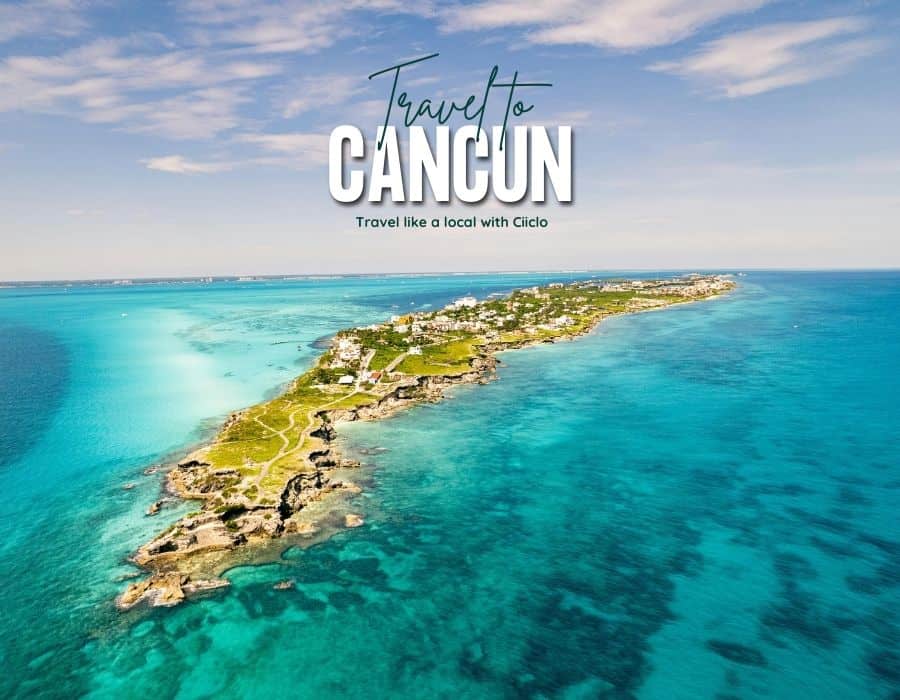
Planning a Mexico City to Cancun road trip? This 12-day itinerary crosses central and southern Mexico, from the capital to the Caribbean coast. Along the way, you will see pyramids, colonial cities, waterfalls, jungle ruins and cenotes. It also shows drive times and tips for booking rides, hotels and tours.
Why Travel From Mexico City to Cancun Overland
Flying between the two cities takes about three hours, but the overland route shows a very different side of Mexico. Instead of skipping the middle, you cross mountains, highlands, jungle and coast in one journey. As a result, you meet ancient civilizations, indigenous traditions and Caribbean beaches in a single trip.
Moreover, the route passes several UNESCO World Heritage sites, including Puebla, Palenque, Campeche and Chichen Itza. You can read more on UNESCO’s page for World Heritage Sites in Mexico. For official travel information, see the Visit Mexico website.
Mexico City to Cancun at a Glance
- Duration: 12 days and 11 nights, although a few extra days leave room to slow down.
- Route: Mexico City, Puebla, Oaxaca, Chiapas, Palenque, Campeche, Mérida and Cancun.
- Distance: Roughly 2,700 kilometers (about 1,700 miles), therefore expect several long driving days.
- Best time: November to April, because the weather is drier and cooler.
- Longest drive: Oaxaca to Tuxtla Gutiérrez on Day 5, so start early.
Best Time for the Mexico City to Cancun Route
November to April is the best time, because the days are drier and cooler. In contrast, the rainy season from June to October brings heavy showers, especially in Chiapas and the Yucatán. Hurricane season also runs from June to November, so check forecasts before you book. Mexico City and San Cristóbal sit at high altitude, therefore pack warm layers for the evenings.
Your 12-Day Mexico City to Cancun Itinerary
This route moves from the highlands to the Caribbean in three stages. Because the drives are long, each day pairs one main stop with an overnight city.
Central Mexico: Mexico City, Puebla and Oaxaca (Days 1 to 4)
Days 1 and 2: Mexico City
Mexico City is one of the largest and most culturally rich cities in the world. Spending two days here lets you see both historic landmarks and modern urban life. Start at the Zócalo, the main square, then visit the Metropolitan Cathedral and the murals inside the National Palace. Next, relax in Chapultepec Park and visit the Frida Kahlo Museum, which usually needs tickets booked in advance.
Food is a highlight, because the city offers everything from street tacos to fine dining. If you have time, add a day trip to the Teotihuacan pyramids, since they sit about an hour from the center.
Day 3: Mexico City to Cholula and Puebla
Leave Mexico City in the morning and drive about two hours to Cholula. The town is home to the Great Pyramid of Cholula, the largest pyramid by volume in the world. A Spanish church sits on top, so the site shows how cultures blended in Mexico.
Next, continue to Puebla, a UNESCO World Heritage city known for Talavera pottery, colonial architecture and Puebla Cathedral. Try mole poblano for dinner, because it is the city’s signature dish.
Day 4: Puebla to Oaxaca
The drive from Puebla to Oaxaca takes about five hours and passes through mountain landscapes and rural communities. Oaxaca is one of Mexico’s most culturally important regions, famous for its indigenous traditions, crafts and cuisine.
In the afternoon, visit Santo Domingo Church, then explore the historic center and the local artisan markets. In the evening, join a mezcal tasting, because Oaxaca is the heart of mezcal country.
Oaxaca and Chiapas: Mitla, Sumidero and Palenque (Days 5 to 7)
Day 5: Oaxaca to Mitla and Tuxtla Gutiérrez
Day 5 is the longest drive of the trip, so leave Oaxaca early. First, stop at Mitla, an important Zapotec archaeological site known for its geometric stone mosaics. Then continue to Tuxtla Gutiérrez, the capital of Chiapas, which marks the move from central Mexico into the lush south.
The full drive takes roughly nine to ten hours with stops, so keep the stops short. A private driver also makes this long day more comfortable.
Day 6: Sumidero Canyon and San Cristóbal de las Casas
This day combines nature and indigenous culture. First, take a boat ride through Sumidero Canyon, where cliffs rise more than 1,000 meters above the river. Next, visit Chiapa de Corzo, then the villages of Zinacantán and San Juan Chamula.
These communities preserve strong indigenous traditions and spiritual practices, so visit respectfully. Photos are not allowed inside the church in San Juan Chamula. The day ends in San Cristóbal de las Casas, a highland town known for cobblestone streets and mountain scenery.
Day 7: San Cristóbal to Agua Azul, Misol-Há and Palenque
This is one of the most scenic days of the journey. Agua Azul offers bright blue cascading pools surrounded by jungle. Misol-Há is a dramatic single-drop waterfall, and a short path leads behind the falls.
The day ends in Palenque, home to one of the most important Maya archaeological sites. The roads here have many speed bumps, so allow extra time and avoid driving after dark.
Campeche, Yucatán and Cancun (Days 8 to 12)
Day 8: Palenque to Campeche
Start early at the Palenque ruins, which are known for jungle-covered temples and intricate carvings. The morning light is soft and the heat is lower, so it is the best time to visit. Afterward, drive about five hours to Campeche, a coastal colonial city.
Campeche is famous for colorful colonial buildings, historic city walls and a quiet seaside atmosphere. As a result, it is one of Mexico’s most charming hidden gems.
Day 9: Campeche to Mérida
The route continues north to Mérida, the cultural capital of the Yucatán Peninsula. The drive takes about three hours, so you arrive with time to explore. Walk around Plaza Grande and Paseo de Montejo, then visit a museum or gallery. In addition, try local Yucatecan dishes such as cochinita pibil.
Day 10: Mérida to Izamal, Chichen Itza and Rio Lagartos
This is one of the most exciting days of the trip, with about five hours of driving. First stop is Izamal, the “Yellow City,” known for its golden colonial buildings. Next is Chichen Itza, one of the New Seven Wonders of the World. Arrive early, because the site gets hot and crowded by midday.
The journey continues to Rio Lagartos, a nature reserve famous for flamingos and mangroves. Stay overnight here, so you can join a boat tour the next morning.
Day 11: Rio Lagartos to Cancun
Visit an underground cenote, such as Cenote Choj Ha, before heading to Cancun. Check opening hours first, because small cenotes often keep short schedules. The drive from Rio Lagartos to Cancun takes about three and a half hours without stops. It also marks the move from cultural exploration to beach relaxation.
Day 12: Cancun
Cancun offers the perfect ending to the journey. Enjoy Caribbean beaches, boat tours, snorkeling and beachfront dining, or simply relax at your resort. After days of cultural exploration, you finally have time to rest and reflect on the trip across Mexico.
Rental Car or Chauffeur for the Mexico City to Cancun Route?
This route covers roughly 2,700 kilometers across several regions, so the way you travel matters. Coordinating buses, taxis and rentals can be complicated, because the stops are far apart.
Rent a car for full control. A rental car gives you freedom, and one-way rentals are possible. However, one-way fees can be high, and you will drive long hours on unfamiliar roads.
Book a chauffeur to relax. A private driver handles the long distances, local roads and parking, so you can enjoy each stop. As a result, groups and families often find it more comfortable, although the cost is higher.
On Ciiclo, you can compare airport transfers and chauffeur rides where they are available.
Where to Stay Along the Route
The itinerary uses one overnight base for each stage, so book rooms early in busy months. Here is a simple plan:
- Mexico City (nights 1 and 2): Stay in Centro or Roma, because both are close to the main sights.
- Puebla (night 3): Choose the historic center, so you can walk to the cathedral and restaurants.
- Oaxaca (night 4): Stay near the zócalo, because the markets and churches are within walking distance.
- Tuxtla Gutiérrez (night 5): Pick a simple hotel, because you arrive late after the long drive.
- San Cristóbal de las Casas (night 6): Choose a hotel with heating, because nights are cold at this altitude.
- Palenque (night 7): Stay close to the ruins, so you can start early the next morning.
- Campeche (night 8): Choose a hotel inside the walled city, because the main sights are close by.
- Mérida (night 9): Stay near Plaza Grande, so you can walk to restaurants in the evening.
- Rio Lagartos (night 10): Pick a small hotel by the water, because boat tours leave from the town.
- Cancun (night 11): Choose a beach resort, since the last day is for relaxing.
Practical Tips for the Mexico City to Cancun Route
- Book an open-jaw flight into Mexico City and out of Cancun, because it saves a long backtrack.
- Start early on long driving days, because roads are slow in the mountains and near Palenque.
- Avoid driving at night, since speed bumps and livestock can be hard to see.
- Pack warm layers for Mexico City and San Cristóbal, because both sit at high altitude.
- Carry some cash in pesos, although cards work in most hotels and larger restaurants.
- Check current travel advisories and road conditions in Chiapas before you go, because they can change quickly.
Mexico City to Cancun FAQ
How many days do you need for the Mexico City to Cancun route?
Twelve days is a good pace for this itinerary. However, adding two or three days leaves more time to relax along the way.
How far is Mexico City from Cancun by road?
The most direct road route is roughly 1,800 kilometers. In contrast, this itinerary takes a longer scenic route of about 2,700 kilometers.
Is it safe to drive from Mexico City to Cancun?
Many travelers complete the route without problems. Still, check current advisories, avoid driving at night and use a trusted driver on long mountain stretches.
What is the best time to take this route?
November to April is best, because the weather is drier and cooler. In contrast, the rainy and hurricane season runs from June to November.
Do you need a car to travel from Mexico City to Cancun by land?
A car or private driver is the easiest option, because several highlights sit far apart. Buses also connect the main cities, although they take longer.
Is it worth hiring a chauffeur for this route?
It can be, especially for groups or travelers who prefer not to drive long distances. As a result, you can enjoy the views and avoid navigation stress.
Plan Your Mexico City to Cancun Trip with Ciiclo
Ciiclo is an all-in-one travel booking app for hotels, flights, tours, tickets and airport rides. Download the Ciiclo app to build a day-by-day Mexico City to Cancun itinerary with the AI trip planner. It is free on iOS and Android. Then book your stay, tours and rides where available, and manage every booking from your phone.
Tin tức liên quan
Top Những Công Việc Ngành STEM Được Trả Lương Cao Nhất
Ngành STEM Là Gì? STEM (Science, Technology, Engineering, Mathematics) là một trong những lĩnh vực...
Ciiclo hợp tác cùng Vancouver Vietnamese Youth Community: Ứng dụng All-in-One dành cho người Việt tại Vancouver
Trong thời đại công nghệ số, người Việt trẻ tại Canada, đặc biệt là tại...
Cách Xin Study Permit từ Bên Ngoài Canada
Bạn cần một thư chứng nhận cấp tỉnh (PAL) hoặc thư chứng nhận cấp lãnh...